The Paddle In The Park Contest is back for 2015!

Showing posts with label portage. Show all posts

Tuesday, April 2, 2013

Pt 1 :: Making Room For Autism In Our Canoe - We Used To Canoe Too

Legendary environmentalist, author, artist and cartographer
Hap Wilson wearing the Six Degree Project scarf for
Autism Awareness and Acceptance - WAAD 2013
(April 2) in snowy Muskoka, Canada.
(Abbey supports autism too! Ruff ruff!)
photo credit: Andrea Turner-Wilson

Dig this: April 2nd is World Autism Awareness Day (WAAD) and April is also known to many as Autism Awareness Month.  This multiple part story/part guide, written in honour of The Six Degree Project (Autism Awareness Celebrity Campaign) and WAAD, is the tale (with tips) of how we got to the end of the portage with our son. With hopes to help raise awareness about autism and the extra challenge it brings to lives of many families, including ours; we also hope this Making Room For Autism In Your Canoe "series" helps to inspire other families to get out there and live their dreams as best as they are able - because even though, with autism, our lives are different - they shouldn't be less. Thanks to our family and friends who have shown their support and a special thank you to Hap Wilson for showing his support for autism awareness and acceptance. ~Fiona

Hey, we USED to canoe too!
When our son, Makobe, received his diagnosis of autism at the age of two, we really didn't realize just how much our lives were going to change. My husband and I had met and it didn't take us long to find that a mutual love and passion for paddling and the outdoors were not the only things we had in common. Soon, after an extended travelling trip to B.C., we were married. Two years later we had our beautiful son. Even still, our relationship and careers were built and shaped by the paddle sports industry. We lived for paddling. However we soon realized Makobe's autism, with his over-hyperactive behaviours and inability to self-regulate, had made it nearly impossible for us to continue our regular paddling and wilderness canoe trips as a family.

Indeed, we were not alone. Mike and I have met many families along our autism journey that had given up a beloved pursuit because it didn't fit in very easily with the demands and difficult behavioural issues that autism brought to the child and family. "Oh we used to canoe too!" was a statement I grew weary of hearing. I knew why, of course - it is difficult enough to get thru a normal autism day let alone try to take on the extra challenge of a wilderness canoe trip! Unable to plan for a paddling trip, we knew we were well on our way to saying something similar to our friends and family ourselves until we discovered the principles of ABA (Applied Behaviour Analysis) and decided we were going to be a family of paddlers - even if it took us years to get there.

And it did. Eight years, in fact. Eight years before our son was ready for his real first wilderness canoe trip. There were many tears and meltdowns along the way but each struggle and hand-drawn visual aid was worth every minute when we walked across that first portage - a huge transition for Makobe - with great success, a little giggle, and a big smile. The smile was his Dad's. The giggle was mine but the great success all belonged to Makobe.


So after years of practicing and planning, we had finally made it! Yet there was more to this journey than we realized. Yes, we had learned how to make room for autism in our canoe; but by doing so, we had also learned how to better make room for autism in our lives. With the help of visual aids, the proper teaching techniques, breaking the big skills down into individual skills before being taught as a whole, Dr. Vince Carbone's Verbal Behaviour (VB) protocols, plus lots of patience and creativity - we realized that our son could do anything he put his mind too with our support and encouragement. Not to mention the principles of ABA (and VB) can be applied anywhere - yes, even on a portage!


Start'em Young
So while much of the tactics we used and will be sharing are for families of children with autism or special needs, much of this approach could also be applied to paddling with any child, really. It is important to remember that how our parents spent time with us as children influenced our idea of comfort when we later became adults. The more positive time you spend outdoors, in nature, with your children (at any age) - the greater chance they will seek out the wilderness later in life and with their own children as their chosen pastime. Getting young children to feel comfortable and enjoy spending time in the the outdoors is important; and remembering our connection with Nature is paramount for our survival on this planet. Besides, getting your hands filthy with camp dirt and feeling your feet get wet in the warm summer waters of a fresh water lake - or the salty sea - is something that everyone should have the pleasure of experiencing in their lifetime. And when children see their parents enjoying an outdoor experience and simpler life-style, they do too. It is also important to remember whether the child has autism or not - there is always room in a canoe for fun!

Coming NEXT: The Journey Begins, Paddling at Home


Written by Fiona Westner-Ramsay in support of The Six Degree Project Autism Awareness campaign.

To read all the parts to this story guide, click here: Making Room For Autism In Your Canoe

To read our report from Makobe's first wilderness trip into Algonquin, please click here: Making Room For Autism In Your Canoe - A Trip Report

**Stim(s) or Stimming are the terms most used to describe a self-stimulatory behaviour or activity that is performed repetitively and usually to the alienation of others.  Examples can be screaming, hand-flapping, finger play, rocking, spinning, lining up objects, verbal behaviour, etc.

Thursday, July 12, 2012

Roses Are Red - Portages Are Pink!

The Pink Canoe in Huntsville, ON.
Not many of us look forward to a portage (unlike our friends Preston and Nancy over at Portageur.ca). Some of those off-water routes are pretty gruelling, after all. But none so gruelling as The Pink Portage. This 1200 km portage, with a pink canoe, through southern Ontario (From Kingston to Windsor!) is bringing awareness to cancer research and raising funds for the Canadian Cancer Society.

Andrew Metcalfe, the man under the pink canoe, was moved by the experience of three close family members, his mom, his grandmother and his aunt, who were all diagnosed with breast cancer. He decided to take action, with the unlikely idea to carry a canoe for cancer. For those of us who have experienced portaging, we know this will be no easy task.

As Andrew puts it, "I will encounter constantly changing inclines, slippery gravel walkways, gusty headwinds, seemingly increasing canoe and pack weight and obvious fatigue and soreness. All this may seem like a lot, but it pales in comparison to what a person with cancer goes through on a daily basis."

We couldn't help but be moved by Andrew's passion and spirit. But after reading his story in various news papers and websites, we were even more personally motivated to support Andrew's Pink Portage. As it turns out, both Andrew and Fiona graduated from the same highschool - Lakeshore Collegiate Institute - a huge surprise to Fiona***.

We think Andrew was digging the LCI connection too.***
Here he is pictured with Mike [right] in front of the Algonquin Outfitters
store in Huntsville, ON (Andrew [left] asked to bring out some Badger paddles
for the photo op - after all they were made by one of his fellow alumni).

So when Andrew portaged thru Huntsville, ON (the hometown of Badger® Paddles) just a short while ago, we made sure to show our support for his fight against cancer and tried to provide some encouragement as well. After spending a rest night in the area, having spent the evening meeting well-wishers and supporters at the Algonquin Outfitters Huntsville location, Andrew woke the next day to find a pink Badger® WaterColours™ Paddle donation under his pink canoe - put there by the little paddle elves while he slept away some of his physical exhaustion from the many miles already portaged.

"Thank you for making the canoe feel lighter this morning." Andrew's email said after finding the pink paddle. If only Andrew knew how much we are thanking him - for having the determination to make a difference and the fortitude to follow thru with his charitable intentions. He has inspired us all on so many levels. He has also proven to the world that "true men portage pink"!

Read the story behind The Pink Portage, or track, and follow Andrew during his pink portaging adventure for cancer:


Donate via the website and track his progress:


Follow Andrew's travels on his blog:

Email to offer your support:

Connect with the Pink Portage on Facebook:

Tweet your support onTwitter:


Be sure to watch for Andrew on your travels for the next while (we hear he likes cold water or Gatorade™) and show him your support along the way, either in person or by way of the links above. After all, we are all in the fight against cancer together!

"[sic]... your support will be the difference from just a guy carrying a pink canoe to something where we all take a step together in the fight against cancer." ~ Andrew of The Pink Portage


"Together, we portage; Together, We Can!"


***Although Lakeshore Collegiate Institute (LCI) may sound like an appropriately named highschool for a pink portaging humanitarian and a canoe paddle business owner to have both graduated from, LCI is not a place where canoeing or kayaking is/was a popular past time. At least it wasn't during Fiona's time there. In fact, none of Fiona's friends or peers really canoed or portaged - at least not on wilderness trips  - when she was in highschool. Except for Fiona (plus a very select few who she would  later convince to accompany her to Algonquin Park) and her family, most didn't share the interest of travelling canoe routes north of the city. "There was no one for me to really talk to about canoeing or paddling back then. It wasn't something I could share with most of my friends. I am not sure what Andrew's (The Pink Portage) personal experience was, graduating from Lakeshore Collegiate in 2010, and whether or not he had paddling friends at LCI (or if his family was his influence as mine was with me), but I definitely blushed pink with excitement when I saw that he was a fellow Lakeshore grad. Finally a LCI paddler like me - complete with portages too! Plus it is a really great cause to support." Fiona said.

While it may have taken almost 2 decades for Fiona to find a fellow paddler from her highschool - the wait was well worth it. For Andrew is not only part paddler and part portager,  he is also part philanthropist too. Fiona and Mike are proud to support Andrew and The Pink Portage - no Badger® buts about it! Good luck to Andrew in his final steps towards Windsor - the end of his epic fundraising journey of cancer awareness. ‎In the words of Carol Pearson, “Heroes take journeys, confront dragons, and discover the treasure of their true selves.”. We all know that heroes come in many forms... but apparently they are now even known to carry a pink canoe.


Monday, August 29, 2011

5 Reasons To Get Your Own Paddle According to A Passionate Portageur and Paddling Pooch


The following article was written by paddler, "portageur", best friend to Nancy, and blogger; Preston Ciere of the informative website, Portageur.ca. It is entitled: Get Your Own Paddle... where Preston - and Nancy - walk us thru 5 great reasons to possess and use your own canoe or kayak paddle(s). Thanks to Preston for allowing us to publish the following post, but an especially big thanks to Nancy, the loveable and loyal paddling pooch - who looks as comfortable paddling in her PFD as she does running the portages with Preston. We know this great article was all her idea!

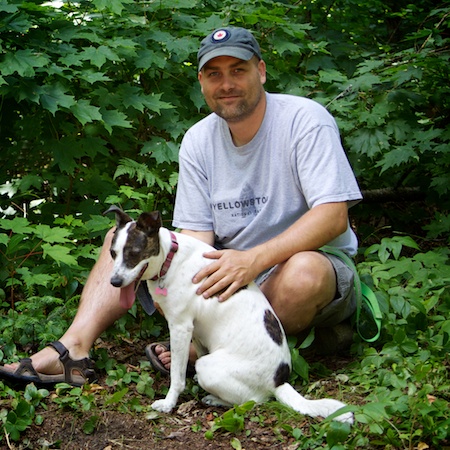
Preston Ciere with his loveable
 and loyal paddling partner, Nancy.
Preston was born in Hamilton, Ontario. As a young child, he would wander off into the woods looking for what was out there, and has never really grown out of that. He spends every chance he can get wandering around the Ontario wilderness. When back in the city, he spends half his time entertaining other. He started his website as an outlet to tell his tales to the right audience. He’s also particularly funny and when not portaging enjoys writing in the third person.

Nancy was born somewhere in Louisiana (probably), and after migrating north into Canada, bulked up to become the ideal portageur. Her job is threefold: reconnaissance, security and ambassadorship. She stays alert to keep her group aware of any present dangers, especially small critters that would otherwise surely steal supplies. She’s always paving the way along and around the perimeter of portages, scouting the route for any dangers and showing the group how to get past obstacles – though she often forgets the lesser skills of her comrades. Of course the greatest asset she brings is her natural ability to greet new friends along the trails and rivers.  As a trade off to these skills, she rarely carries anything, and paddles even less, but all things considered, no one ever minds.

Guest Badger Blogger, Preston (and Nancy) Ciere,
www.portageur.ca (Ontario, Canada)
Preston and Nancy lookin' cool in a canoe that has seen many miles.
Get your own paddle!

5 reasons why having your own
makes for a better paddling experience
After the movie “The Color of Money” came out, thousands of pool halls were filled with people walking in carrying a little case under their arms. They’d look down their mirrored sunglasses, pop it open and screw together their custom cue, peering around at who was watching them - no doubt, with “Werewolves of London” playing in their head. This was an annoying new trend to say the least - especially when once they started to play it became obvious that a custom cue didn’t make them any good. 

Paddling is nothing like pool (for one thing, you don’t want anything to sink). Having your own paddle has nothing to do with showing off, and isn’t just a luxury for professionals. It’s more about comfort and preference - making your paddling trips as enjoyable as possible. Admittedly, like a custom cue, it will make also you feel pretty cool. 

1 - Better than the rentals
Generally, when you rent a canoe it comes with paddles. So why would you want your own? Well, the paddles you get when renting a canoe are not the greatest. More often than not they’re those small bladed plastic and aluminum ones that dig little water, so they’re slow and offer little control. They’re also terribly uncomfortable, without the give of wood, or shaped to fit your hand properly. The odd time you’ll get yourself a nice wooden paddle - or one that may have been nice a few years ago. If you’re lucky it may be in a size and style that suits your needs, but usually rental paddles are pretty generic, not to mention scratched and worn from years of use.

2 - There’s a paddle for that
How do you paddle, and why? Getting yourself the right paddle for your style of paddling makes for a great experience. For example, ask yourself whether you are more of a “Destination” or “Journey” kind of person. If it’s all about just getting somewhere as quickly as possible, you may want a wider bladed paddle. On the other hand, if you plan on spending more time floating around exploring than where you’ll eventually end up, you may want a longer but thinner blade for control. Run a lot of rapids? Travel long distances? Prefer to be in the stern or the bow? There are paddle styles to suit all those needs. Talk to a good paddle maker and they’ll recommend something to suit your style. 

3 - Get a grip
A truly under-rated element of the paddle is the grip. If you’re going to do a lot of paddling, a nice comfortable grip is what is going to make the experience much more pleasant. Cheap paddles and rentals will have very basic grips designed to just do the job, leaving you with sore hands and blisters. Look for a paddle with a nice contoured shape that feels good in your hands. Pick it up and take some air strokes so you can judge how good the shaft feels as well - too thin or too thick might make for hand cramps. The best part of having your own paddle is that it’ll be free of all those scratches and marks that will cut up your hands after a day’s paddle, because you’re the one taking care of it, and you can even have them fixed - cheaply for you DIY types.

4 - Size matters
Often you may not be able to choose the size of your rented paddle, but even when you have a choice you might find yourself with a bad fit. A poorly fitted paddle can make you bend at the torso during your stroke, making you shift your weight unnecessarily for an unstable and uncomfortable ride. One measuring technique is to check the paddle’s height up to your chin. Unfortunately, this only works for one type (size) of blade. It’s the paddle’s shaft that’s important. The other more common method is to hold the paddle over your head, checking for your arms resting at right angles. This might be a better way to measure, but you still might not be happy with the size of your paddle. The best size will be the one that meets your paddling style. Some like to reach out further, some sit lower or tilted in the canoe. Try out some different sizes and see what makes you more comfortable and stable. 

5 - As special and unique as you are
Recently, when my friends and I were choosing new paddle styles, I took it rather seriously. I spent hours deciding on what size and style I needed. After I finally decided, I asked what made one friend choose his. Turns out, choosing between two similar types, he simply chose the cooler looking one - a completely valid deciding factor. Paddles have all kinds of looks with all kinds of options. You can get paddles in all kinds of colours and stains, in unique woods, with special logos, imprints and even custom paint jobs. 

Bonus - The Connection
There are some that can look at their paddle, show you each and every scratch and tell you a great story about where it happened and why. The first paddle I owned came from a friend who took great care with his, and  insisted I take it, with all the stories attached to it. I was lucky to find it was exactly the right size. Sure, it had been worn in for me, but I soon knew every nook and cranny. It felt perfect in my hand, and it moved the water just right. It was like that old t-shirt you love because it fits you just right. This paddle had been many places, and maybe I was imagining it all, but after all its travels it felt like the paddle was guiding me. 

And that, is why you want your own paddle.

Written by Preston (& Nancy) Ciere [of www.portaguer.ca] for Badger's Blog, August 2011.

Thanks to these two adventurers for
sharing their insights on the benefits
of paddle ownership.
Thanks again to Preston, that guy in the stern, for keeping the canoe so steady so Nancy could look great in so many photos! Plus another big thanks to them both for compiling such a great list of resources and information for paddlers and campers on their website. If you are thinking of doing a wilderness canoe trip, looking for the straight up goods on an Ontario park route, camper's tips and tricks, or how to prepare for your very first real canoe trip, then be sure to add www.portageur.ca to your list of favourites - 'cause you are going to want to visit this website more then once. You can also follow Preston (portageur_ca) on Twitter, "friend" Nancy, or find portageur.ca on Facebook. And if you happen to meet up with Nancy and Preston on the trail one day, be sure to tell them Badger says "Woof ". (Don't worry - Nancy will know what it means... even if Preston isn't too sure! *wink*)


Note: Comments and opinions of our guest bloggers do not necessarily represent or reflect the views of Badger Paddles and are the expressed writings of the "guest" only. All content has been published on Badger's Blog with permission of it's author and is original to the guest writer. All copyright inquiries should be directed to the guest writer/blogger where necessary.

Wednesday, May 25, 2011

Badger's Tip of the Week - Tarpaulin: Don't Get Caught Up The Creek Without One

Badger Paddles' Tip of the Week includes information on paddling, camping, portaging, boat transport, and maintenance tips, as well as any other information that we may find to be useful around our sett.

tarpaulin |tärˈpôlən; ˈtärpə-|nounheavy-duty waterproof cloth, originally of tarred canvas.• a sheet or covering of this.historical sailor's tarred or oilskin hat.• archaic a sailor.ORIGIN early 17th cent.probably from tar pall -ing .tarp |tärp|noun informala tarpaulin sheet or cover.ORIGIN early 20th cent.: abbreviation.New Oxford American Dictionary
There is a list of essential gear that many paddlers abide by. And, although that list may differ a bit according to individual need, if you don't already have a tarp as part of that mandatory gear list, then this week's tip just may change that. A tarp (and some rope) is a great emergency tool and can also greatly improve quality of life around a camp site. Once you realize the number of ways in which a tarp (stuffed anywhere into a boat or pack) can be utilized in any number of situations, then you probably won't want to get caught up the creek, river or lake, without one either.

This photo by Mike Ramsay - Missinaibi River Trip, circa 1997.
They (Mike and 3 other guys) used make-shift tarp sails on their
Swift Royalex Dumoines to travel sections of this vast river.
(Mike also slept under a tarp on this trip.)
Some Things You Can Do With A Tarp
  • Use it as a ground sheet. (either under your tent to protect the floor or as a "picnic blanket" while you eat).
  • Can be used as a substitute tent fly (who hasn't gone on a camping trip where someone forgot their fly?).
  • Use it alone as a shelter for sleeping (string some rope between two trees and use rocks and/or logs to keep the sides down)(find 4 trees to substitute as poles and tie the tarp between them, low to the ground and sloping down on one side - to divert water away from you incase it rains).
  • Use it as a wind break - create a wall by stringing the tarp between two trees.
  • Use it as a rain shelter - create a roof by stretching the tarp between trees - slope the tarp (or find a tall tree-wood pole) so as to not collect rain water and weigh it down in the middle.
  • Use it as a sun shelter - tie the tarp off between trees, etc. at an angle away from the sun.
  • Make a canoe sail with it (using long tree wood poles usually found on location rigged to your satisfaction) See above photo.
  • Use it as a make-shift stretcher to carry a sick/injured person over short distances/portages.
  • Use it to collect or catch water for drinking and/or washing.
  • Use it in an emergency to help a person retain much needed warmth (by wrapping them in a tarp after putting them in their sleeping bag).
  • Can be cut strategically and used as an emergency stand-in rain poncho
  • Can be used to make a Bear Burrito* (when hanging your food is not possible).
  • Can be used to collect and transport larger amounts of small bits of firewood or to keep firewood dry during a down pour. 
  • Use it to make an outside area private for the purpose of changing or latrine use (wrap tarp around one or two trees to create a corner stall and secure to other trees on each side).
  • Can be used to fashion a quick backpack (put your stuff in the middle of the tarp and wrap it up in a tight roll, add some rope and your imagination and you have yourself a make-shift pack).
  • If the tarp is a strong colour visually, it could be used as a way to signal if you become lost or stranded.  Find an open area or clearing and spread the tarp out flat on the ground (holding it down with rocks at the corners) so your location can be seen from the air.
  • Add some duct tape or tarp clips to your rope bag and who knows where your tarp could take you! See: BLUE TARP KAYAK
So as you can see, whether you are planning a day paddle or an extended period away in the bush, a tarpaulin can make a huge difference in your trip - especially when it really matters most. We always bring a tarp with us on our paddling adventures and have had to dig it out more then once and were always glad we had it. In fact, having a tarp on hand could possibly help to save our lives one day. And yours too.

*A Bear Burrito is when you take all of the food packs and gear that you would normally hang in a tree (as a precaution against bears) and wrap/roll/fold them into a neat (some what smell-tight) tarp package a few hundred metres away from your camp site.


Do you have any tips to share? Send us your tips and paddling advice - and if your tip is featured here - we will send you a free Badger Paddles sticker!!! All you have to do is email us your suggestions.
Bookmark and Share