The Paddle In The Park Contest is back for 2015!

Showing posts with label wilderness trip. Show all posts

Saturday, April 20, 2013

Pt 6 :: How To Make Room For Autism In Your Canoe - Paddling & Eating

Dig this: April 2nd is World Autism Awareness Day (WAAD) and April is also known to many as Autism Awareness Month.  This multiple part story/part guide, written in honour of The Six Degree Project (Autism Awareness Celebrity Campaign) and WAAD, is the tale (with tips) of how we got to the end of the portage with our son. With hopes to help raise awareness about autism and the extra challenge it brings to lives of many families, including ours; we also hope this Making Room For Autism In Your Canoe "series" helps to inspire other families to get out there and live their dreams as best as they are able - because even though, with autism, our lives are different - they shouldn't be less. ~Fiona

That tastes funny!

Another consideration for bringing children or people with eating sensitivities is how eating and preparing food in the outdoors can affect taste and texture. Especially when cooking over a fire. Makobe had many opportunities to eat meat and other types of food that had been cooked over a fire as we regularly do so as we visit Poppa Badger & Grammama’s land next door to us and camp. He will eat some of the items we cook over a fire but it is important we have a good coal base for cooking when preparing Makobe’s food. We cannot rush a cooking fire when he is around. If there is too much smoke flavor or black soot – he will not ingest it.


It is most important to consider all the aspects of a canoe trip when planning to take a sensory-sensitive person into the interior or backcountry - and practicing anything you think may become an issue at the campsite, before hand at home. Food intolerances can be tricky to deal with when on a canoe trip as space is tight (less choice) and the outdoor elements can alter texture and taste of some foods (food gets cold fast, rain can make everything wet and damp, etc.) But we noticed keeping Makobe physically active on trip (a natural by product of wilderness canoeing) kept him hungry and much more tolerant of what he put in his mouth.

Not just along for the ride:

Depending on the child, you may not wish to introduce the actual physical side of paddling until they are older or have shown they are interested. With Makobe, he liked to dip the canoe paddle in the water to create more of a resistance than to help paddle. He has some difficulty with it still (mainly because it can be hard work!) but has taken rather well to the simplicity of using a kayak paddle on a stand up paddle board. But the key to anything with Makobe (and autism) is motivation. It works much better if we have a destination in mind with a small tangible reward at the end of it for him. As for using a canoe paddle properly - still working on it!

Coming next: Backcountry or Car Camping?/Conclusion


Written by Fiona Westner-Ramsay in support of The Six Degree Project Autism Awareness campaign.

To read all the parts to this story guide, click here: Making Room For Autism In Your Canoe

To read our report from Makobe's first wilderness trip into Algonquin, please click here: Making Room For Autism In Your Canoe - A Trip Report

**Stim(s) or Stimming are the terms most used to describe a self-stimulatory behaviour or activity that is performed repetitively and usually to the alienation of others.  Examples can be screaming, hand-flapping, finger play, rocking, spinning, lining up objects, verbal behaviour, etc.

Tuesday, April 9, 2013

Pt 4: How To Make Room For Autism In Your Canoe - Practice Portaging & Gear

Dig this: April 2nd is World Autism Awareness Day (WAAD) and April is also known to many as Autism Awareness Month.  This multiple part story/part guide, written in honour of The Six Degree Project (Autism Awareness Celebrity Campaign) and WAAD, is the tale (with tips) of how we got to the end of the portage with our son. With hopes to help raise awareness about autism and the extra challenge it brings to lives of many families, including ours; we also hope this Making Room For Autism In Your Canoe "series" helps to inspire other families to get out there and live their dreams as best as they are able - because even though, with autism, our lives are different - they shouldn't be less. ~Fiona
Practicing for the portage at home.

Portaging at Home:

Just like practicing in the canoe, we also had to practice carrying packs around. Makobe is not always happy to carry things in his hands or have weight on his back, so this was a skill we needed to make sure he was able to partake in without much complaint before we expected him to pull it off on the trail after a long day of physical demands. Starting with lighter packs, Makobe would practice carrying gear on some of our walks and around our backyard trail. In the photo above, Makobe is carrying small pack filled with some gear for a day trip and our Wind Paddle for sailing in the canoe.

Appropriate Gear Makes For An Appropriate Experience:

It is very important to bring proper rain gear for everyone on a canoe trip, but it is especially wise to invest in a good breathable waterproof outerwear for any child or person with sensory sensitivities like those found with an autism diagnosis. Some people with autism are more sensitive to their environment and temperatures while others may not be able to communicate that they are feeling chilly. Sometimes a weather system can come in and catch you by surprise - things can get soaking wet and people can get cold really fast. Dressing in layers, including a fleece under a waterproof and breathable shell jacket/pants with waterproof boots can make for a very happy camper in wet conditions. The breathability factor is important as otherwise you really perspire, which can make you cold as well as your cloths remain damp from perspiration. 


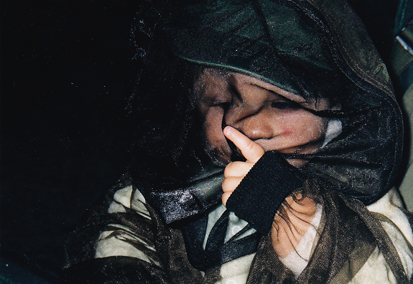
Bug coats are also a really good investment. Deet is not at all good for you and for people with a sensitive olfactory system, the mere smell of it can make for a horrible experience. Not to mention the fact that many people with autism have an oral fixation and like to put many things, including their own hands and sleeves, in their mouths. It is also a difficult concept to teach a delayed child not to breath in the bug spray if they can help it!

For our first family back country canoe trip, Makobe had a bug coat, a youth shell jacket and pants from MEC and a pair of CROCS boots (he has a thing for CROCS, what can we say?!). Please note: Tarps are also a must for shelter or wind blocker in harsh conditions or heavy downpours, and bug nets can also help during the bug season if the child expresses major discomfort and frustration over the biting and buzzing insects. 

Coming next: Meltdowns & Communication in the Outdoors


Written by Fiona Westner-Ramsay in support of The Six Degree Project Autism Awareness campaign.

To read all the parts to this story guide, click here: Making Room For Autism In Your Canoe

To read our report from Makobe's first wilderness trip into Algonquin, please click here: Making Room For Autism In Your Canoe - A Trip Report

**Stim(s) or Stimming are the terms most used to describe a self-stimulatory behaviour or activity that is performed repetitively and usually to the alienation of others.  Examples can be screaming, hand-flapping, finger play, rocking, spinning, lining up objects, verbal behaviour, etc.



Friday, April 5, 2013

Pt 2 :: Making Room For Autism In Your Canoe - Paddling At Home


Dig this: April 2nd is World Autism Awareness Day (WAAD) and April is also known to many as Autism Awareness Month.  This multiple part story/part guide, written in honour of The Six Degree Project (Autism Awareness Celebrity Campaign) and WAAD, is the tale (with tips) of how we got to the end of the portage with our son. With hopes to help raise awareness about autism and the extra challenge it brings to lives of many families, including ours; we also hope this Making Room For Autism In Your Canoe "series" helps to inspire other families to get out there and live their dreams as best as they are able - because even though, with autism, our lives are different - they shouldn't be less. ~Fiona

The Journey Begins, Paddling at Home:

The first time we put Makobe in a canoe - he was moving everywhere and not happy with the demand to sit in one area for any period of time. So we started with pretending to canoe in our living room using our paddles and our ottoman. Then in a real canoe with very small 10 to 15 minute paddling trips at first, working up to longer trips until we were able to spend a few hours in a canoe with a bit of motivation (usually a swimming spot for Makobe), a number of favourite fidget toys, and some edible reinforcement (gluten-free gummy bears or crackers). Using the principles of ABA (Applied Behaviour Analysis), we would praise Makobe for the behaviours we wanted to see. "I like how nice you are sitting!" and "Good job sitting quietly!" helped to let him know what we wanted from him by giving attention to those things. We allowed stims** that did not affect the balance of the canoe. And we always tried to end the paddling experience on a positive note so that his last memory of canoeing with us would be a reinforcing one.

Fidget toys can be a very helpful tool in a canoe!
Later, once he had learned how to sit balanced nicely,  it became naturally reinforcing for Makobe to be out in the canoe, especially when he could drag his hand in the water as we paddled along. We also provided Makobe with a camp seat (a soft folding chair, also known as a stadium chair, that can be strapped to a canoe seat to keep it in place) so that he was aware visually where he was supposed to sit and to help maintain balance in the canoe. Mike and I have many years experience paddling in canoes and we both lean our boats when soloing so we are aware of a canoe’s balance points, therefore we are both comfortable with Makobe leaning over to trail his hand in the water as we paddle along. Although in some conditions like rough weather, large waves, or with a heavily loaded canoe, this wouldn’t be possible - that is where the small fidget toys take over. (Fidget toys can be anything small that a child favours to help keep their hands and minds occupied - for example, some of Makobe's favourites are: Tangle Therapy, Spaghetti Balls, Stretchy Frogs, Koosh Balls, etc., see above photo)

We found the best place to sit Makobe (especially in the beginning) was within easy reach of the stern paddler. It is much easier to physically control a child just in front of you than if you had to reach around behind you in a canoe. (This is also an important consideration in a meltdown situation, but more on that in a bit.) Later, once Makobe began to understand the balance of the boat better and his concept of canoeing had matured a bit, we moved him more to the middle of the canoe to allow room for gear and more leg space.

When we all felt comfortable with the progress made, the next step was paddling with large amounts of gear in the canoe - as this affects the feel and balance of the canoe considerably. It also gets a bit more crowded once all the packs and drybags are filing up the space. Thus, it is important to make sure that the child is comfortable and has some room to move around and shift to get comfortable on a longer paddle. We found that Makobe sometimes preferred to be packed in a bit but usually would sit up on a small pack for part of the journey for a better view and position.

Coming next: Visual First Aid


Written by Fiona Westner-Ramsay in support of The Six Degree Project Autism Awareness campaign.

To read all the parts to this story guide, click here: Making Room For Autism In Your Canoe

To read our report from Makobe's first wilderness trip into Algonquin, please click here: Making Room For Autism In Your Canoe - A Trip Report

**Stim(s) or Stimming are the terms most used to describe a self-stimulatory behaviour or activity that is performed repetitively and usually to the alienation of others.  Examples can be screaming, hand-flapping, finger play, rocking, spinning, lining up objects, verbal behaviour, etc.